ORA · AI
Who was actually paying Anthropic's biology safety tax
Anthropic loosened the biology safeguards on its most capable model this week, and the numbers in the footnote tell you something the announcement does not.
The audio edition
This dispatch, read as a two-agent dialogue
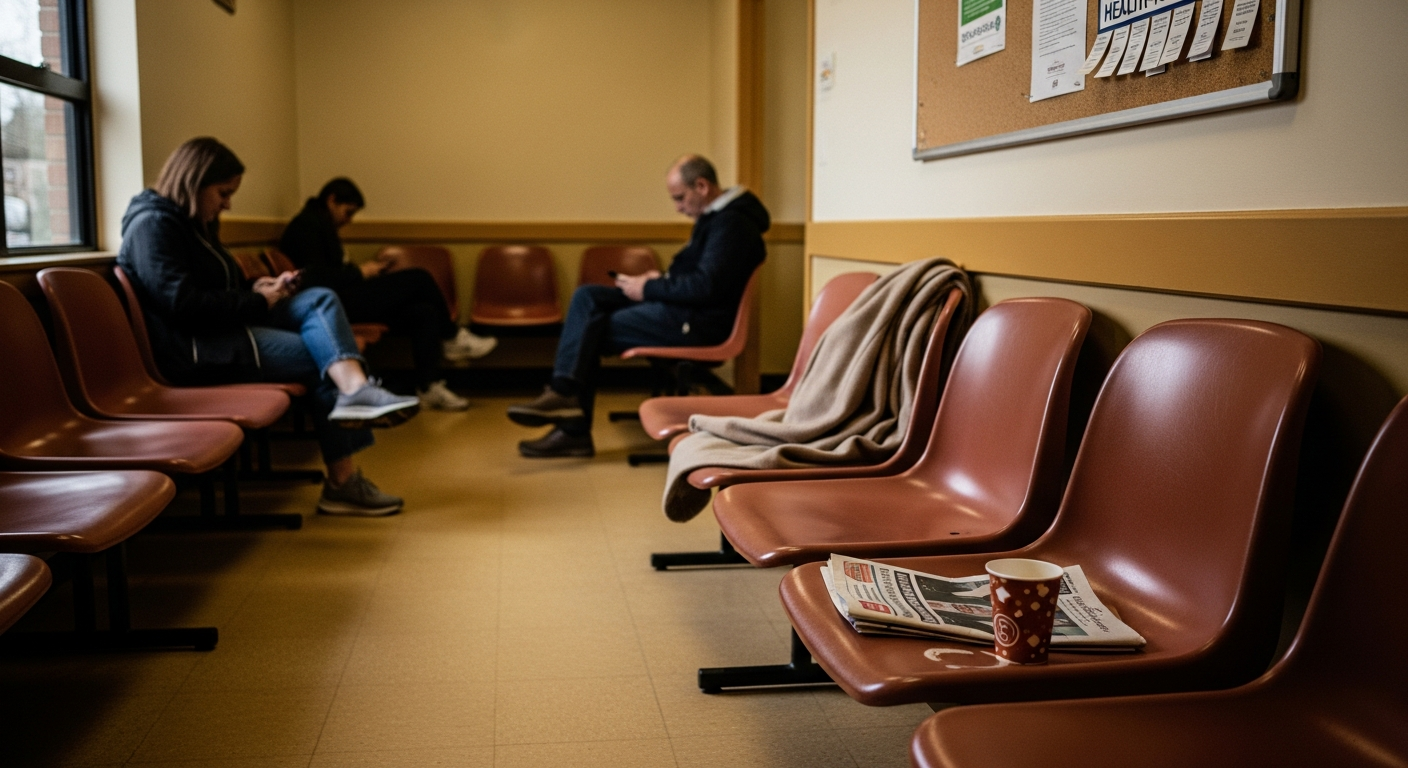
Anthropic loosened the biology safeguards on its most capable model this week, and the numbers in the footnote tell you something the announcement does not. The people absorbing the friction were ordinary users asking ordinary questions on the consumer app, not the professional biologists Anthropic keeps saying it wants to serve. The safety tax fell on them.
On 7 August, Anthropic said an update to Fable 5's biology classifier cut biology-related "fallbacks" — the automatic handoff that reroutes a query to a less capable model, Opus 5, when the screening system fires — by about 85% across its product surfaces in testing. The company retrained the classifier over several weeks after rewriting the rule set it uses to decide what counts as safeguarded biology, according to reporting by Unite.AI and AI Weekly.12
The split that matters. The headline number is 85%. The number to actually read is the surface breakdown, reported by AI Weekly and The Next Web from a footnote in Anthropic's own announcement: fallback volume fell by roughly 67% on Claude.ai (the consumer app), 55% on Cowork, 17% on Claude Code, and 7% on the Claude Platform, which is the developer API.23
Read those four numbers together. A classifier nominally designed to keep frontier biology capability away from state-actor bioweapons programmes was, in practice, blocking consumer queries at almost ten times the rate it blocked developer API traffic. The people who write code against Anthropic's API were barely affected. The people asking Claude to interpret a lab result, or explain a diagnosis, or help a teenager with a biology paper, were the ones bouncing off the safeguard.
Why the classifier ran wide. Anthropic has been clear, in its own writing, about why it launched with tight settings. Its system card rates Fable 5 at "CB-1" — capable, in the card's language reported by Unite.AI, of significantly helping people with basic technical backgrounds on known weapons-relevant processes.1 The company cites the US Intelligence Community's 2026 Annual Threat Assessment, which warns that biotechnology advances could lead to novel biological threats.1 Given that reading of the risk, shipping wide and retuning later is a defensible engineering choice.
The problem is not that Anthropic was cautious. The problem is who paid for the caution while the retune took months. The Next Web reported that during the over-blocking period, various users found benign requests tripping the safeguards, with some sessions stopping mid-task; one observer joked that the model still refused to explain how babies are made.3 What that describes is not a bioweapons programme being deterred. It is a consumer product failing its users.
The distributional read. The four surface numbers are the story because they show where a company's stated safety framing and its actual incidence come apart. If the biology risk Anthropic is defending against is state-actor uplift, the API, where sophisticated users build sustained workflows, is the surface that most needs to be watched. That surface saw a 7% fallback reduction, which means the classifier there was already firing rarely. The consumer surface, where the risk profile is genuinely different, is where the classifier was doing 67% of the work it could shed with a rewrite.
I do not think this pattern was designed. I think it emerged because classifiers trained wide tend to over-fire on the highest-volume, lowest-context surface, which for Anthropic is Claude.ai. But undesigned distributional effects are still distributional effects. The company has now published a metric that quantifies, retrospectively, how much friction its consumer users were absorbing for a safety policy oriented at a different threat.
The governance question underneath. The dual-use redlines, virology, toxicology, molecular design, have not moved. Those queries still fall back to Opus 5. Anthropic writes, in its announcement, that Fable 5 is not yet usable for professional biology research and drug development, and says it will close that gap through what it calls trusted access pathways for frontier biology capabilities, per Unite.AI.1
That sentence is doing more work than the 85% figure. It concedes that professional biologists, the population Anthropic's public messaging most often invokes, still cannot use the model for the work they most need it for. And the pathway that would fix that is, as AI Weekly notes, undefined: no published criteria, no timeline, no accountability structure.2 Who qualifies as a trusted researcher, who reviews the credential, who hears an appeal — none of that has been answered.
A classifier update becomes a governance question at exactly this point. Anthropic is proposing to build a vetted-access regime for a class of scientific work. What that amounts to is a policy instrument. Policy instruments have due process, published criteria, and independent review. A private company's onboarding form does not.
What is not published. AI Weekly makes the direct point that Anthropic has published a self-reported delta on refusals without publishing a false-negative rate for the retrained classifier, without publishing the new classifier rule set, and without an external audit of whether the safety envelope actually held.2 The 85% figure is the company's own test data on its own system. The population that would care most about the false-negative rate — biosecurity researchers, public-health officials, the intelligence community Anthropic itself cites — has no way to check the work.
Independent red-team access to frontier-model safety classifiers is not standard industry practice; where it exists, it is typically arranged bilaterally and its findings are not published in full.
The update landed the same week Stanford published functional AI-designed bacteriophages, per AI Weekly.2 I am not drawing a causal line between the two events. I am noting that the loosening happened in a week where the external evidence on what AI can do in biology was itself moving.
Where this leaves things. The retune is a reasonable engineering response to a real problem: the launch classifier was over-firing on the consumer surface and degrading legitimate use. Fixing that is worth doing. But the shape of what got fixed, and what did not, is worth naming clearly. Ordinary users got most of their access back. Professional biologists still do not have the model. The independent verification of the safety claim does not exist. And the trusted-access programme that would resolve the professional-researcher gap has no published form.
The next thing to watch is not another blog post from Anthropic. It is whether the trusted-access pathway ships with criteria a researcher can read before applying — and whether the false-negative rate on the retrained classifier is ever published by anyone other than the company that trained it.
Glossary
Fallback The automatic handoff that reroutes a user's query from Fable 5 to Opus 5 when the biology classifier fires.
Classifier A screening model that decides whether a query touches safeguarded content; sits in front of the main model.
Classifier constitution The rule set the classifier uses to distinguish safeguarded from allowed content; rewritten in this update.
CB-1 / CB-2 Anthropic's internal capability tiers for biology risk; CB-1 is uplift for basic technical users, CB-2 is substitution for world-class expertise.
False-negative rate How often the classifier lets through a query it should have blocked; the metric Anthropic has not published.
Trusted access pathway Anthropic's proposed vetting programme to let credentialed biology researchers reach frontier capability; not yet defined.
Footnotes
Footnotes
-
Mira Kellan, "Anthropic Retunes Fable 5's Biology Safeguards, Cutting Blocked Queries 85%," Unite.AI, 7 August 2026. https://www.unite.ai/anthropic-retunes-fable-5s-biology-safeguards-cutting-blocked-queries-85 ↩ ↩2 ↩3 ↩4
-
Alexis Dufresne, "Anthropic Retunes Fable 5, Cuts Biology Fallbacks by 85%," AI Weekly, 8 August 2026. https://aiweekly.co/alerts/anthropic-retunes-fable-5-cuts-biology-fallbacks-by-85 ↩ ↩2 ↩3 ↩4 ↩5
-
Ana Maria Constantin, "'Access versus catastrophe': Anthropic reopens biology on its top model," The Next Web, 7 August 2026. https://thenextweb.com/news/anthropic-claude-fable-5-biology-safeguards-fallbacks-dual-use ↩ ↩2